START triage sorts on the ability to walk first; the tag is provisional.
Before you read
Test yourself first: 2 questions
Question 1 of 2
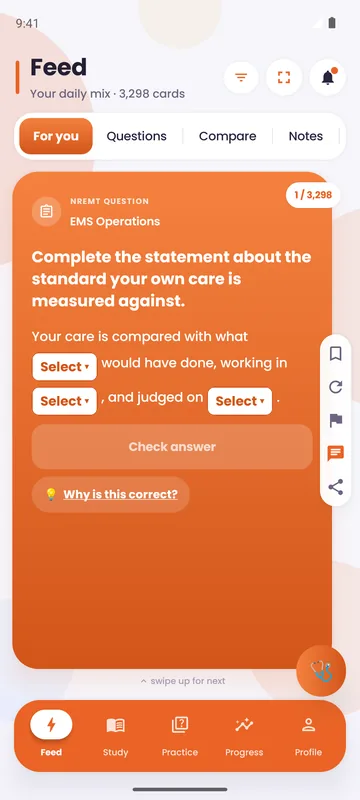
HIPAA's minimum-necessary standard limits how much patient information you share. The one disclosure below to which it does not apply is when you:
Answer: A. The minimum-necessary rule governs payment, operations and most other disclosures, but it is does not apply to disclosures to another provider for treatment, because clinicians need the whole picture. Billing, collections and quality review are legitimate uses, yet each receives only the information needed for that purpose, not the entire record.
Question 2 of 2
A neighbor who helped at the scene asks you what was wrong with the patient. You should:
Answer: A. Disclosure is permitted for treatment, payment and operations, and a curious helper is none of those. Having witnessed part of the call gives her no right to the rest of it, and a diagnosis without a name is still patient information when the listener already knows who the patient is.
Keep the streak going with more questions like these, each with a full rationale.
What is ems operations?
It covers triage, consent, transfer of care, communications, scene command and safe response — the parts of the job that are legal and organizational rather than clinical.
Key points to remember
- START triage sorts on the ability to walk first; the tag is provisional.
- Consent is informed or it is not consent; implied consent covers inability, not refusal.
- Care transfers to equal or higher training, verbally.
- Warning devices request right of way and never remove the duty of due regard.
Field priorities
- Establish command when patients outnumber the crew.
- Notify the receiving facility early enough that it can act.
Coaching the patient
- A colleague on the receiving end does not make a disclosure clinical.
Red flags: act now
- A refusal from a patient whose capacity is in doubt
- Transferring care to someone of lower training
- Disclosure outside the purpose of treatment
EMS Operations: FAQs
What are the priority actions for EMS Operations in the field?
Establish command when patients outnumber the crew. Notify the receiving facility early enough that it can act.
What findings in EMS Operations change your plan or your transport decision?
A refusal from a patient whose capacity is in doubt. Transferring care to someone of lower training. Disclosure outside the purpose of treatment.
What do I need to know about EMS Operations for the NREMT?
START triage sorts on the ability to walk first; the tag is provisional. Consent is informed or it is not consent; implied consent covers inability, not refusal. Care transfers to equal or higher training, verbally. Warning devices request right of way and never remove the duty of due regard.
What should the crew communicate or document for EMS Operations?
A colleague on the receiving end does not make a disclosure clinical.