
💡
Pass with confidence.
Evidence-based strategies, clear plans, and smart practice that fit your life.
Clinical Judgment is 31–35% of the AEMT exam and 34–38% of the Paramedic exam — more than any other domain. Candidates who prepare for it by memorizing more conditions are often disappointed, because these items give you the condition's findings and ask what you make of them.
The reasoning the items follow
- Recognize the cues. Which findings matter? Many items include normal or irrelevant findings on purpose.
- Analyze them. What do the important findings mean together?
- Form a hypothesis. What is the most likely problem — and the most dangerous one you cannot yet rule out?
- Choose actions. What do you do first, and what do you avoid?
- Evaluate. After treatment, what tells you it worked — or that the patient is getting worse?
Many Clinical Judgment items unfold: new findings arrive after an intervention. The right answer often changes as the patient changes — that is the point.
What makes these items hard
- Look-alike presentations. Hypoglycemia and stroke, compensated and decompensated shock, anaphylaxis and asthma. The exam gives you the one finding that separates them.
- The dangerous-but-less-likely diagnosis. The best action often protects against the worst possibility while you confirm the likely one.
- Reassessment. A falling blood pressure after an intervention is the question, not a detail.
How to practice
- Work unfolding cases, not only single questions. A case that changes after each decision trains the evaluate step, which single items rarely reach.
- Study comparisons. For each pair of look-alikes, learn the one finding that tells them apart.
- Say your hypothesis before you read the options. If the options surprise you, reread the cues.
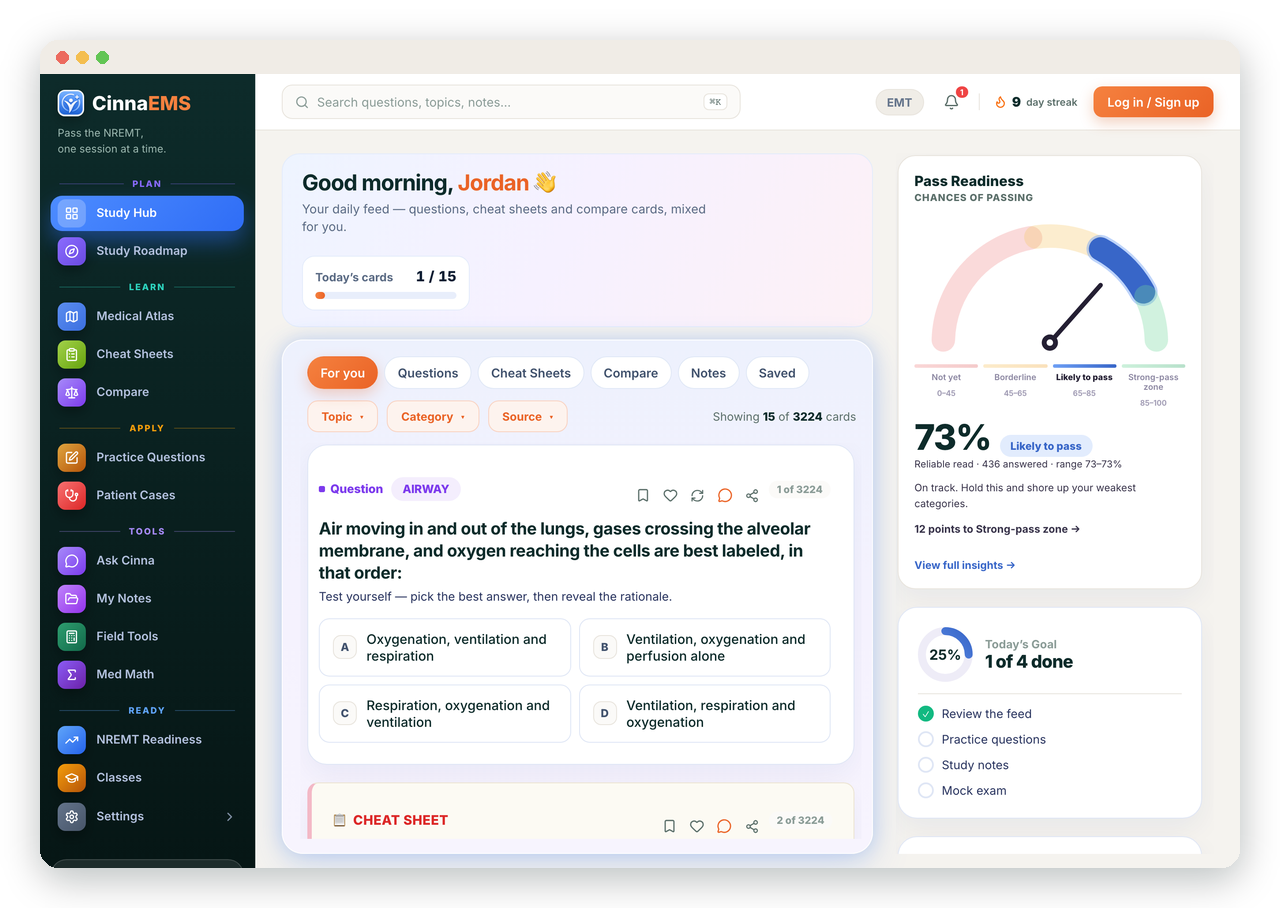
CinnaEMS includes unfolding patient cases that walk through each step with a chart that updates as you go, and side-by-side comparison cards for the classic look-alikes such as tension pneumothorax and cardiac tamponade.